Colorado Parking Garage Cleaning Service
Understanding the Importance, Process, and Best Practices
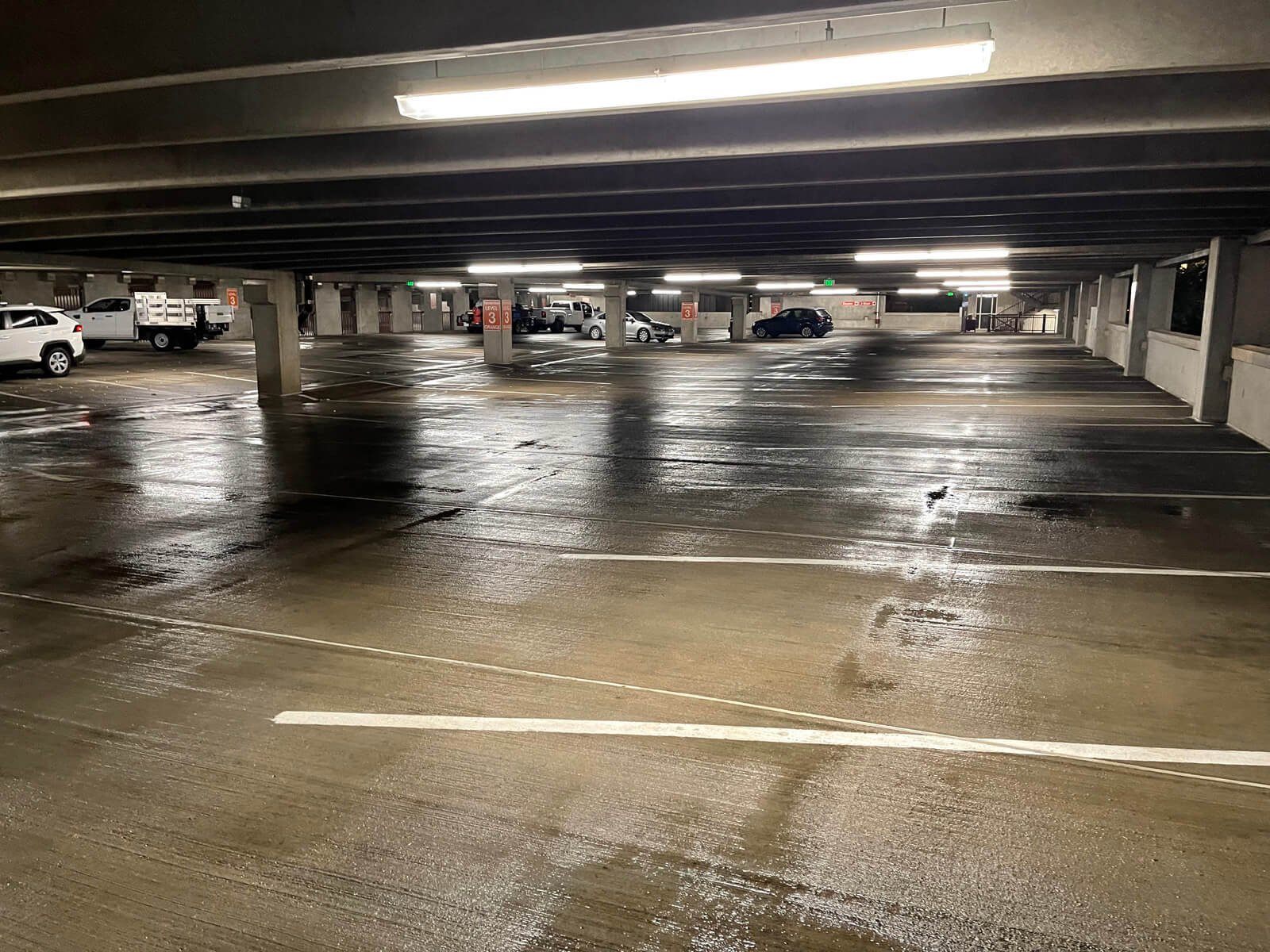
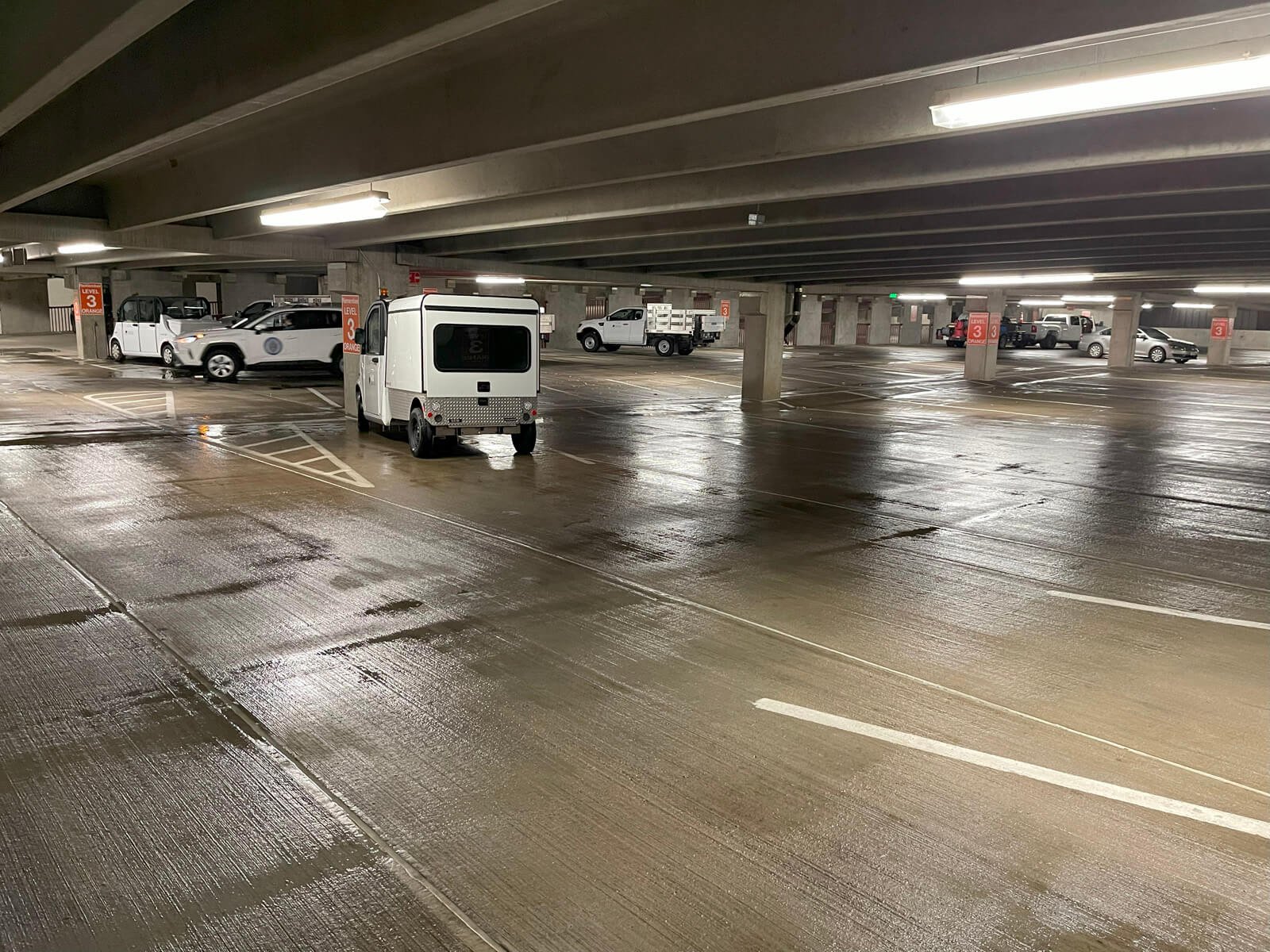
Parking garage cleaning is essential infrastructure in urban environments, serving as hubs for vehicle storage and transit. Because of their constant exposure to vehicular traffic, weather, pollution, and pedestrian activity, parking garages accumulate a considerable amount of dirt, oil, debris, and contaminants. Pressure washing has emerged as one of the most effective cleaning methods for maintaining the cleanliness, safety, and longevity of parking garage surfaces. This comprehensive description will explore the purpose and benefits of pressure washing, the equipment and techniques used, safety considerations, environmental impacts, and tips for successful operation in parking garage environments.
The Role and Importance of Parking Garage Cleaning
Pressure washing and parking garage cleaning involves the use of high-pressure water jets to remove stubborn grime, stains, oil spills, gum, and other contaminants from concrete, asphalt, and other surfaces. In parking garages, where vehicles regularly leak fluids and track in dirt, the need for thorough cleaning is paramount. Pressure washing not only improves the appearance of the facility but also addresses health, safety, and maintenance concerns:
- Appearance: Clean surfaces project professionalism and care, making a positive impression on users. A well-maintained garage is more inviting and may attract more customers in commercial settings.
- Safety: Oil spills, grease, and debris can create slip and fall hazards. Pressure washing removes these risks, promoting safer walking and driving conditions.
- Longevity: Regular cleaning prevents the buildup of corrosive substances that can damage concrete and metal reinforcements, helping extend the life of the structure.
- Compliance: Many municipalities require parking garages to meet certain cleanliness standards for health and environmental reasons.
Parking Garage Cleaning Equipment and Materials
Effective pressure washing in parking garages requires specialized equipment and cleaning agents. The main components of a pressure washing setup include:
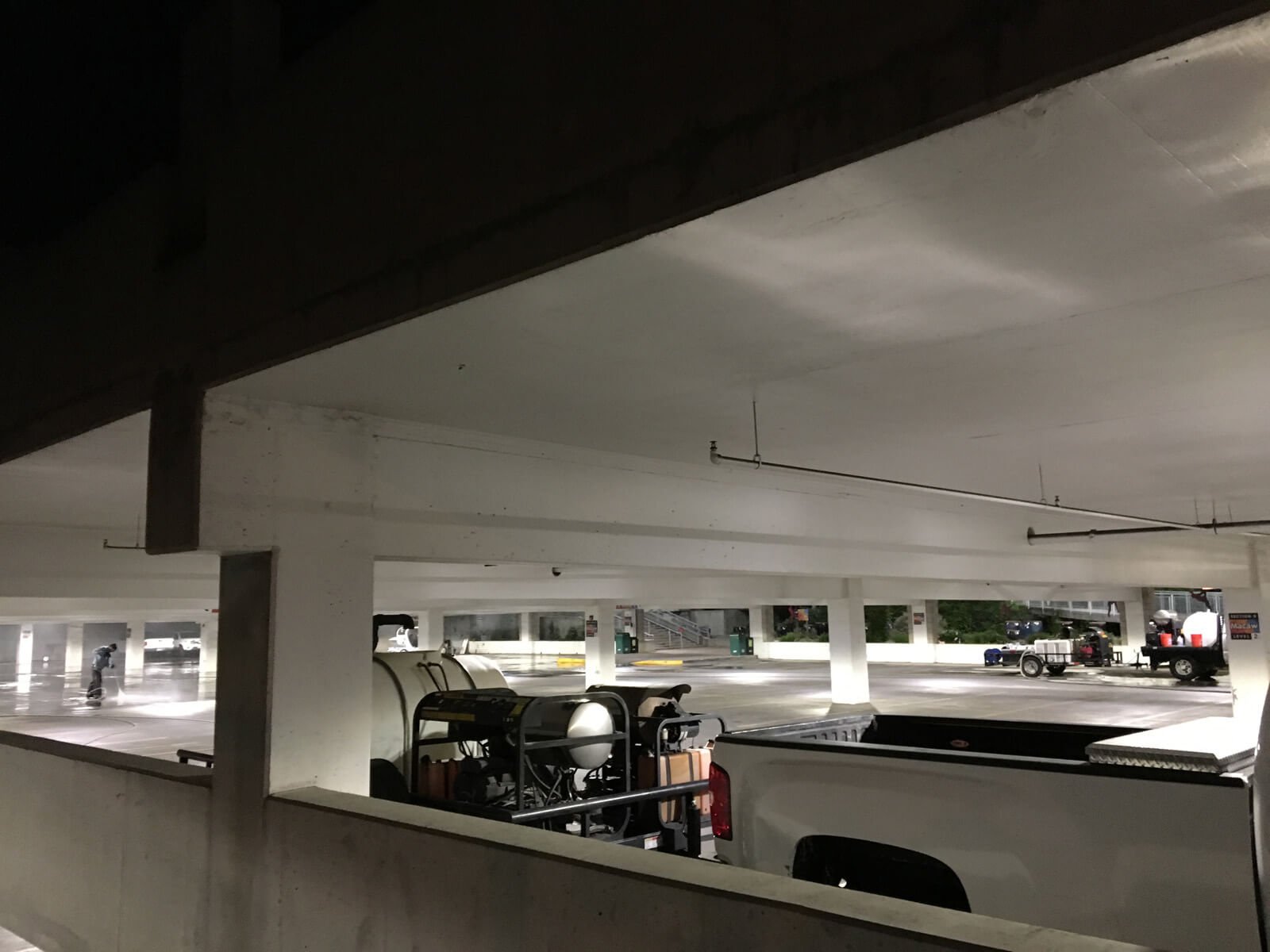
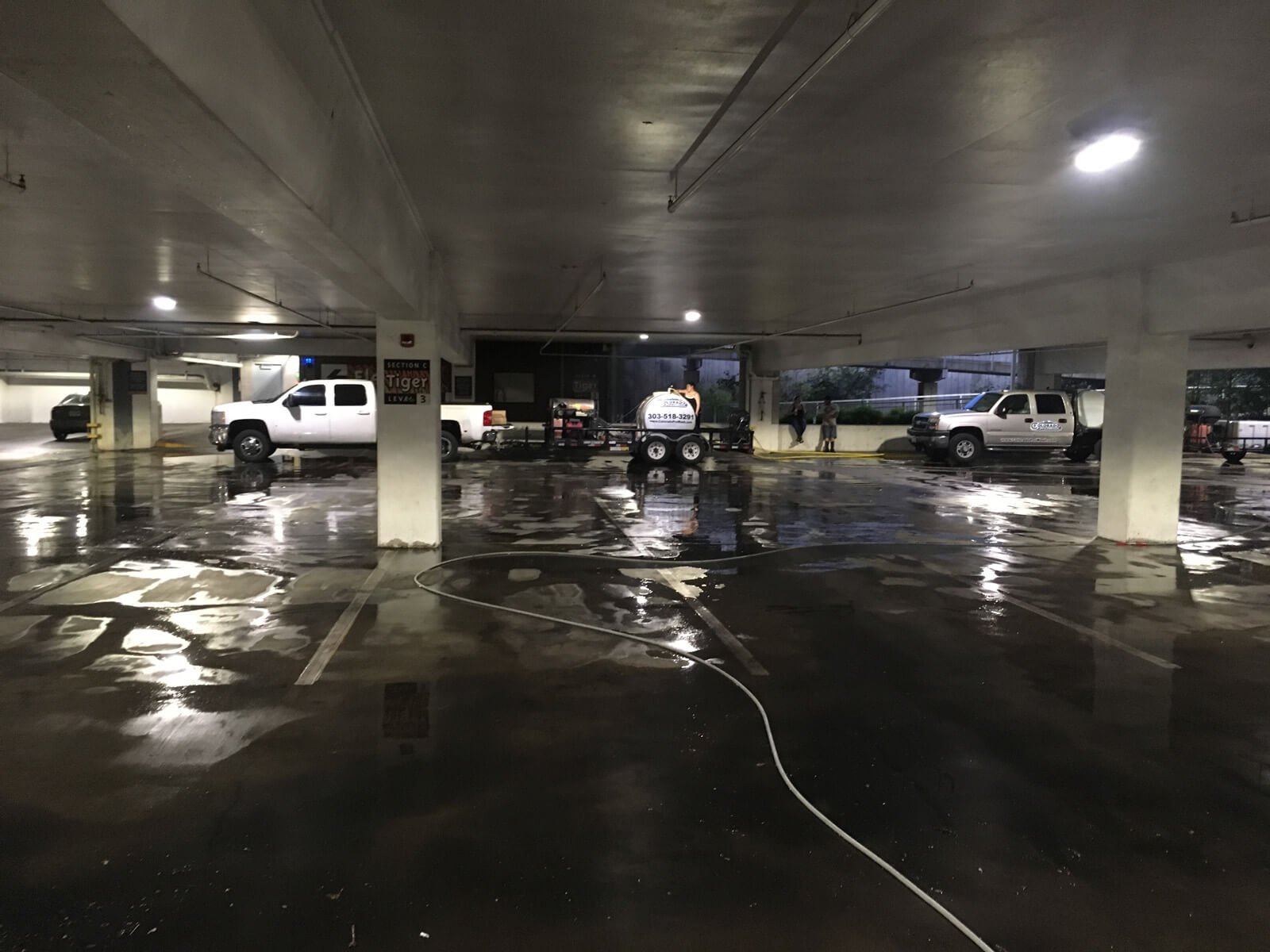
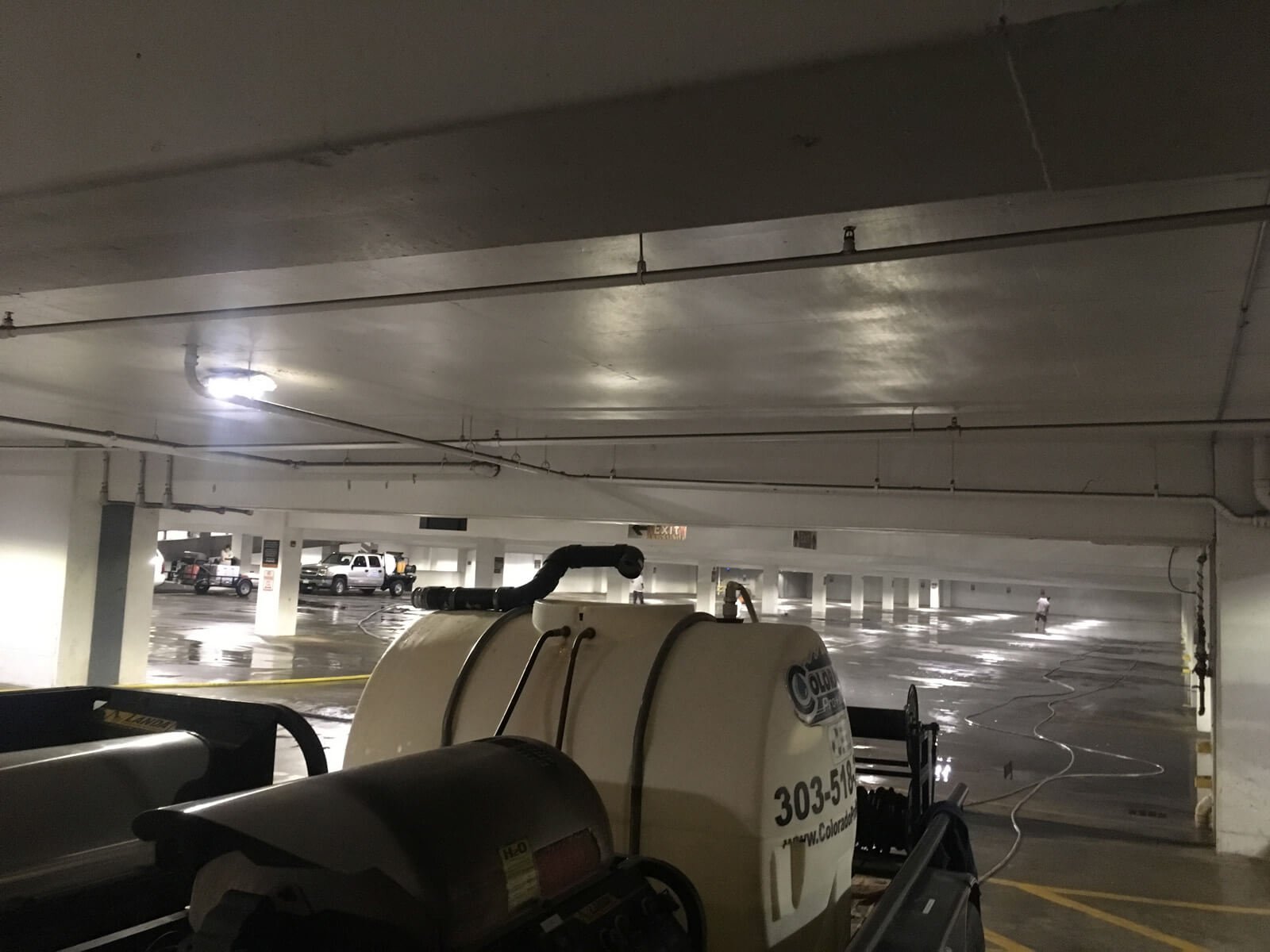
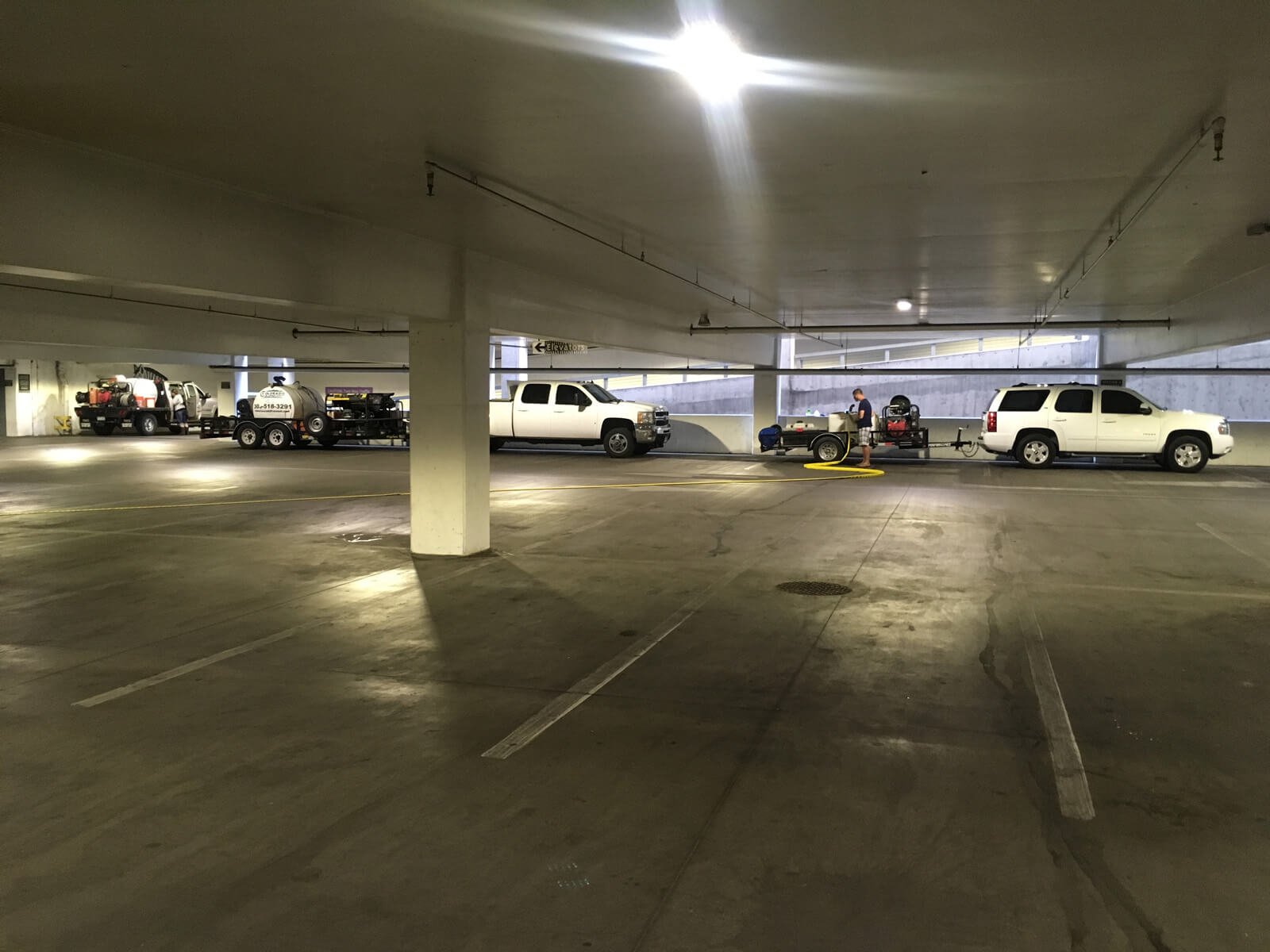
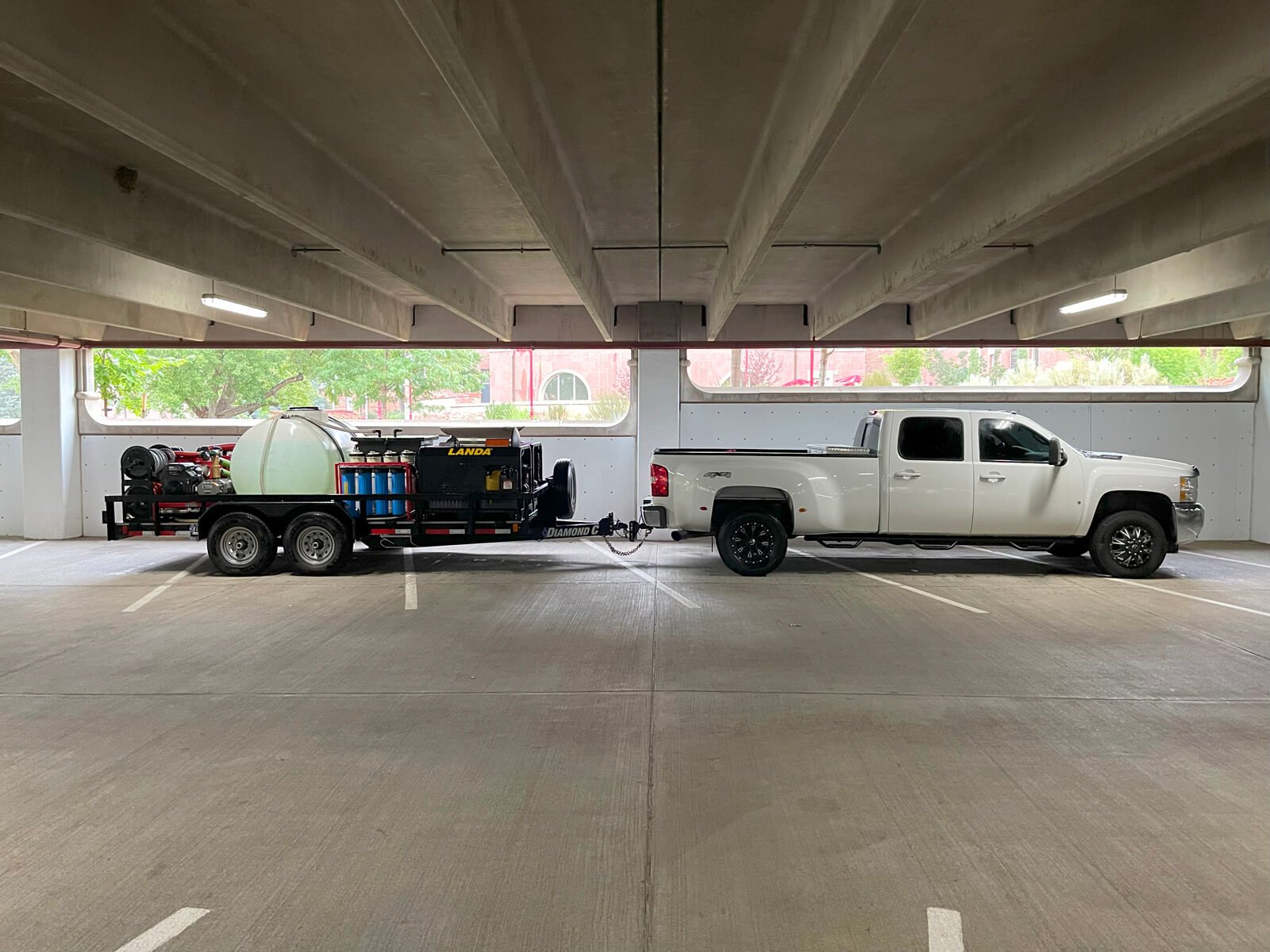
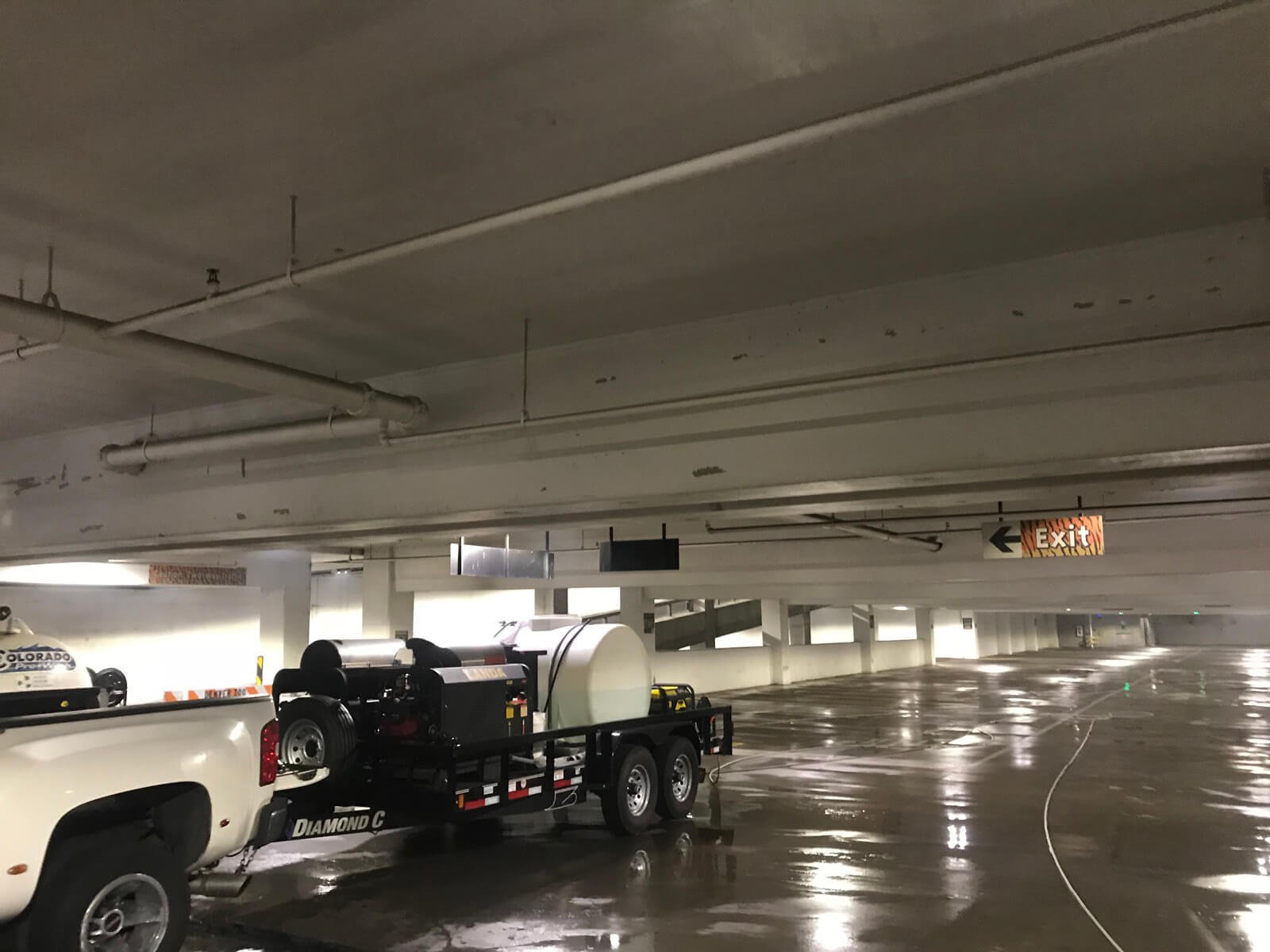
- Pressure Washer: Our commercial-grade machines typically produce water pressure of 3,000 to 4,000 PSI (pounds per square inch). Hot water units are preferred for removing oil and grease, while cold water units may suffice for general dirt removal.
- Surface Cleaners: These are attachments that distribute water evenly across large flat areas, improving efficiency and consistency.
- Spray Wands and Nozzles: Adjustable nozzles allow operators to control water pressure and spray pattern for different cleaning tasks.
- Detergents and Degreasers: Specialized cleaning chemicals aid in breaking down oil, grease, and other stubborn substances. Eco-friendly options are increasingly used to minimize environmental impact.
- Water Recovery Systems: To comply with environmental regulations, many operations use vacuum systems to capture wastewater, preventing runoff into storm drains.
- Protective Gear: Operators wear safety gear, including goggles, gloves, boots, and hearing protection, to guard against injury.
Step-by-Step Process of Parking Garage Cleaning
The process of pressure washing a parking garage involves several key steps, each designed to maximize cleaning effectiveness while protecting the structure and environment:
1. Preparation and Planning
- Site Assessment: Inspect the garage to identify heavily soiled areas, stains, and potential hazards. Note the location of drains and water sources.
- Notification: Notify users and tenants in advance, and post signage to restrict access during cleaning.
- Debris Removal: Sweep or blow away loose debris such as trash, leaves, and dirt before washing.
- Protect Sensitive Areas: Cover electrical outlets, signage, and other sensitive equipment with waterproof material.
2. Pre-Treatment
- Application of Cleaning Agents: Spray detergents, degreasers, or specialty chemicals onto stained or oily areas. Allow proper dwell time for chemicals to loosen contaminants.
- Spot Treatment: Scrub stubborn stains manually if necessary, using brushes or pads.
3. Pressure Washing
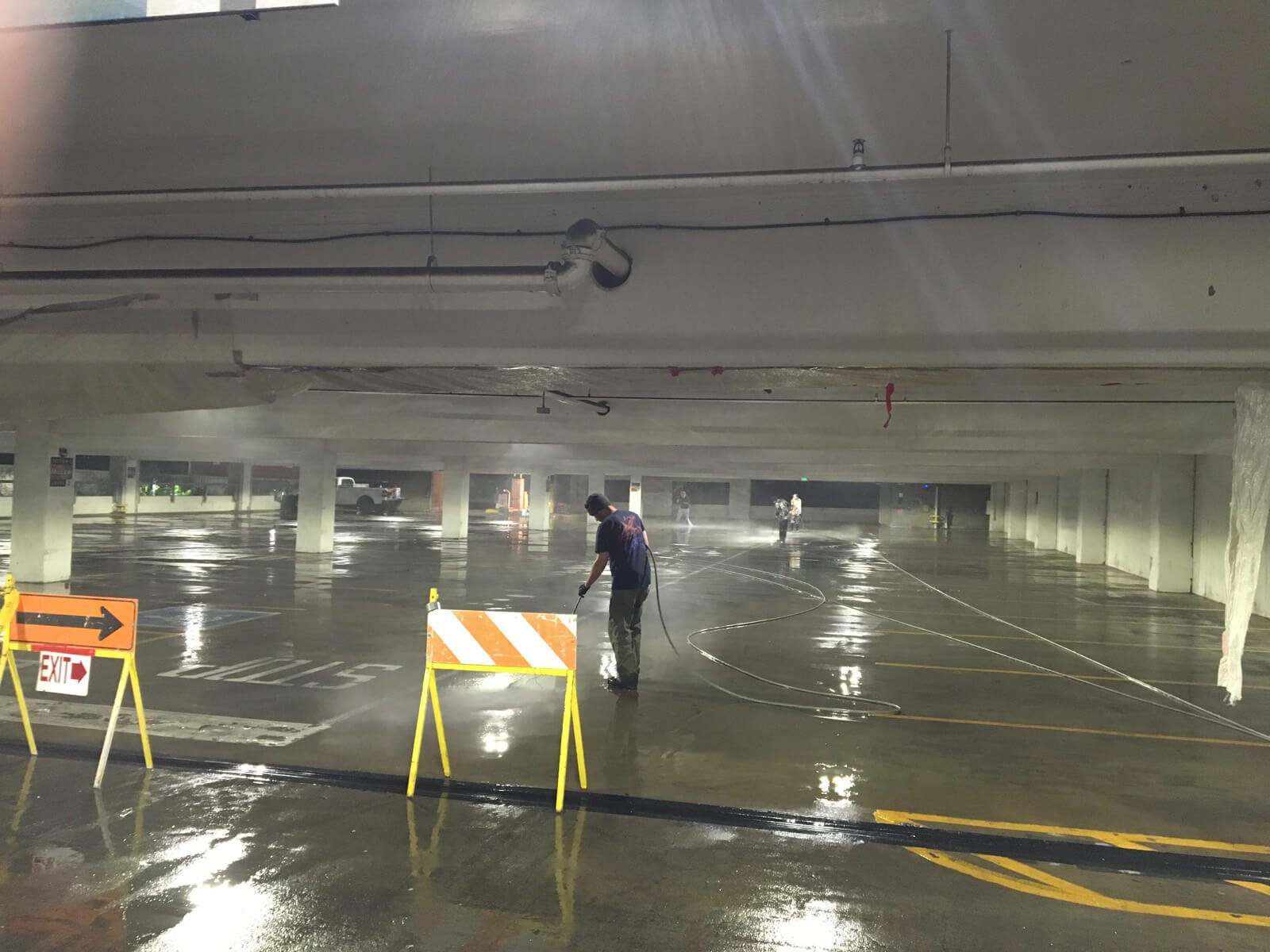
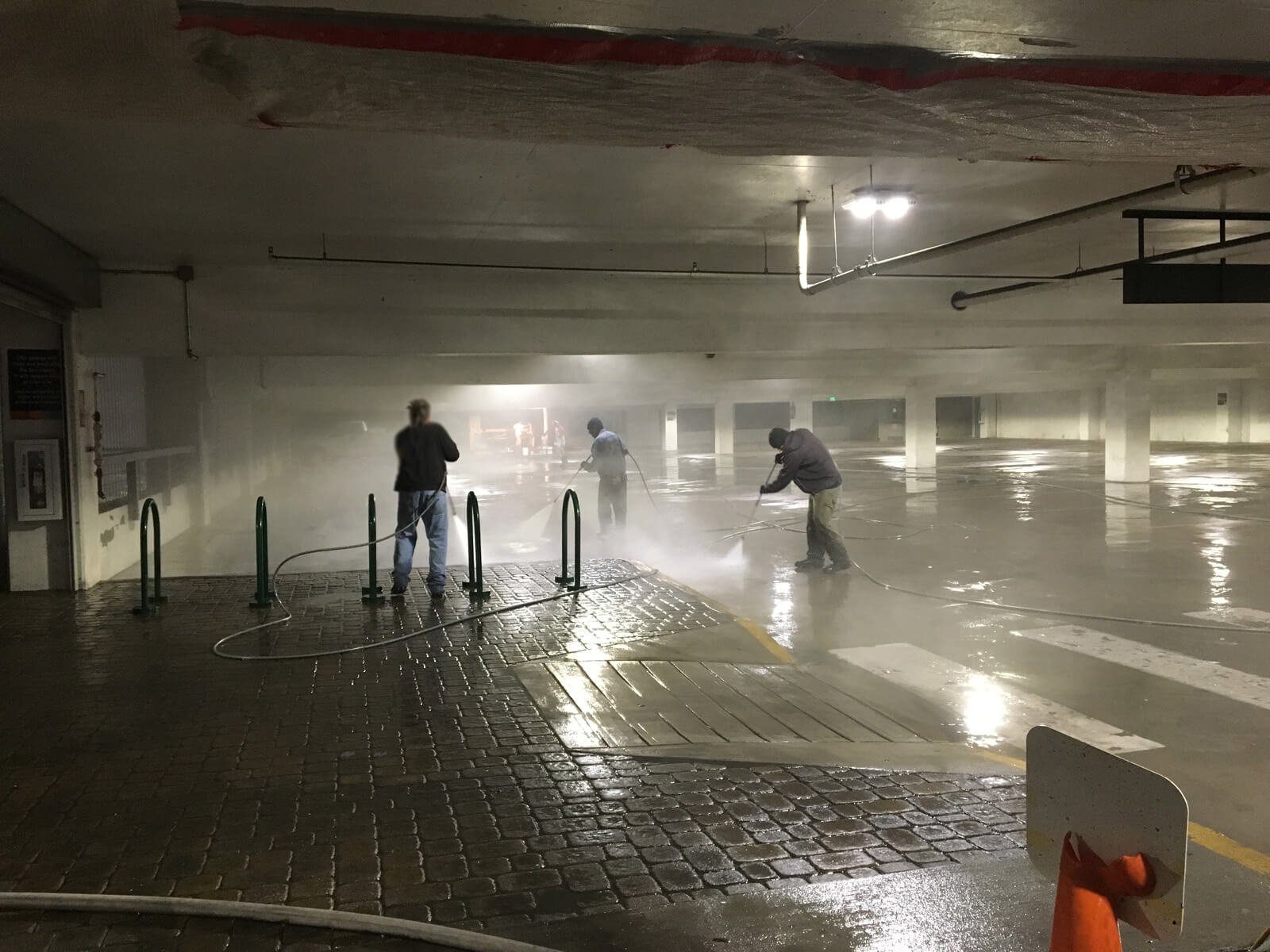
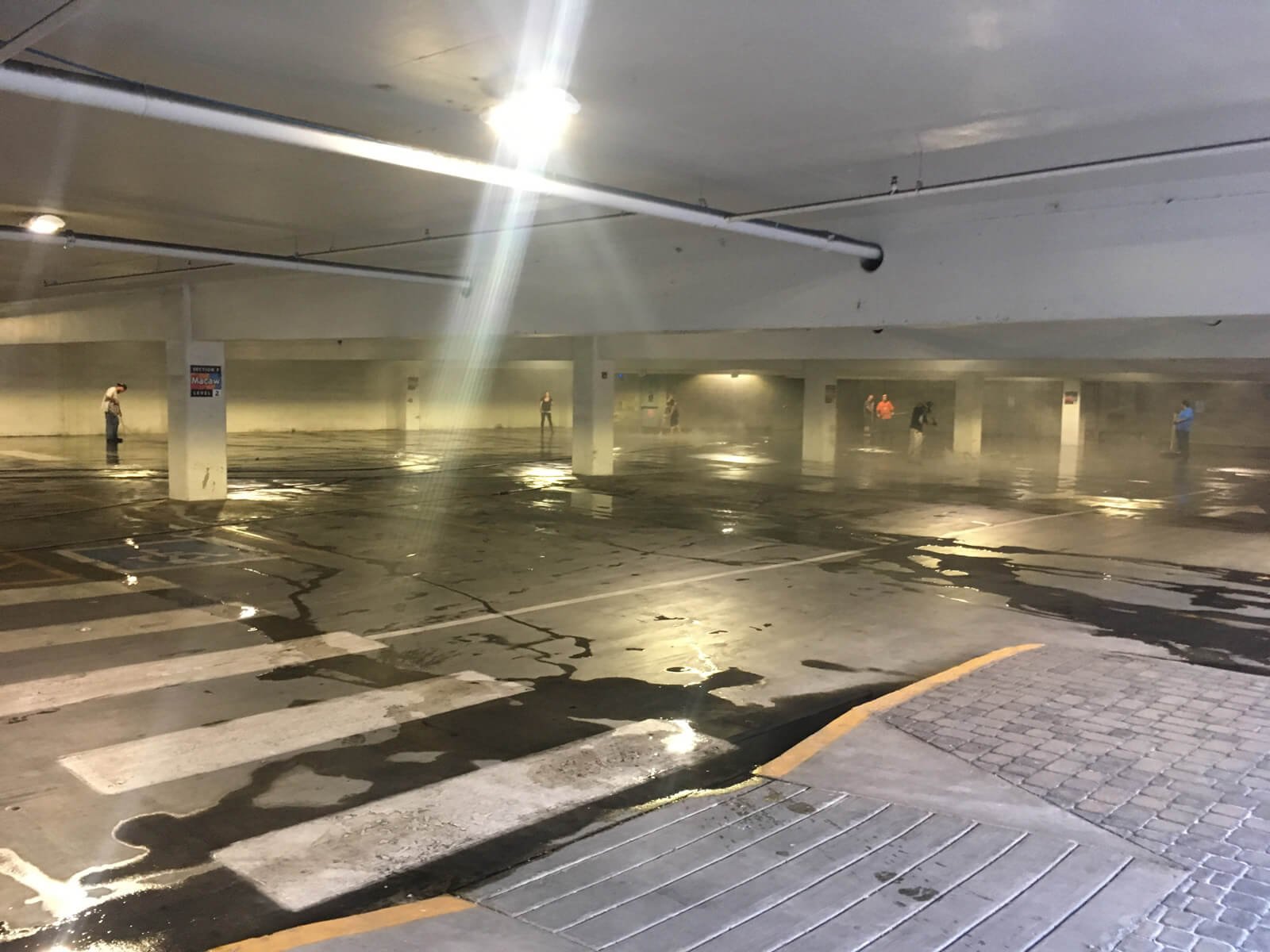
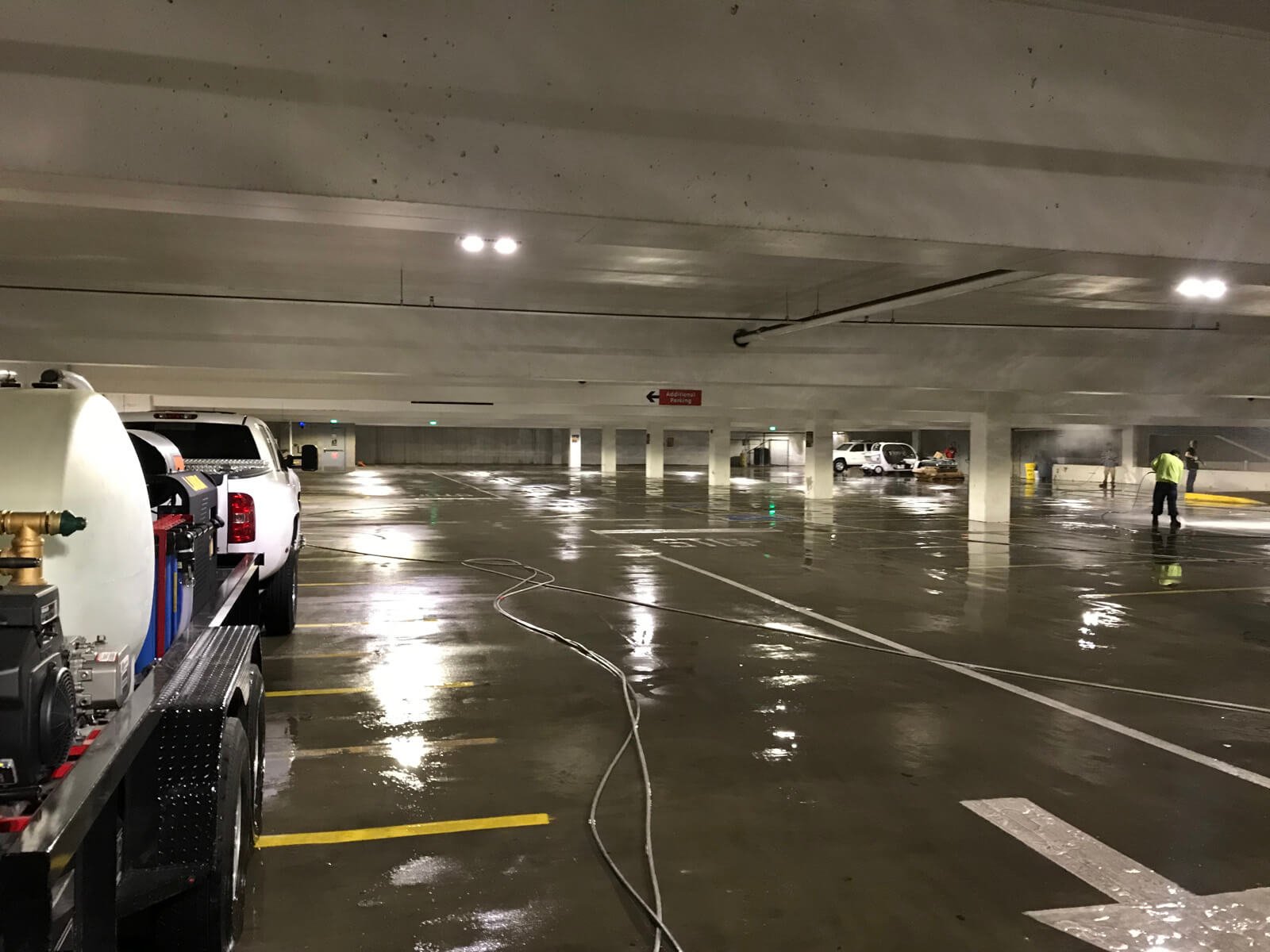
- Surface Cleaning: Use a surface cleaner attachment for large areas to ensure even coverage and avoid streaking.
- Detail Cleaning: Switch to spray wands and targeted nozzles for corners, edges, and vertical surfaces like pillars and walls.
- Layered Approach: Work systematically from one section to another, starting from the highest level if multi-story, to prevent dirt from washing down onto cleaned surfaces.
- Monitor Water Flow: Ensure water flows toward designated drains or collection areas.
4. Wastewater Recovery and Disposal
- Water Collection: Use vacuum recovery systems to collect dirty water, especially when cleaning oil and chemical stains.
- Proper Disposal: Dispose of wastewater in accordance with local regulations. Never allow contaminated water to flow into storm drains.
5. Final Inspection and Post-Cleaning
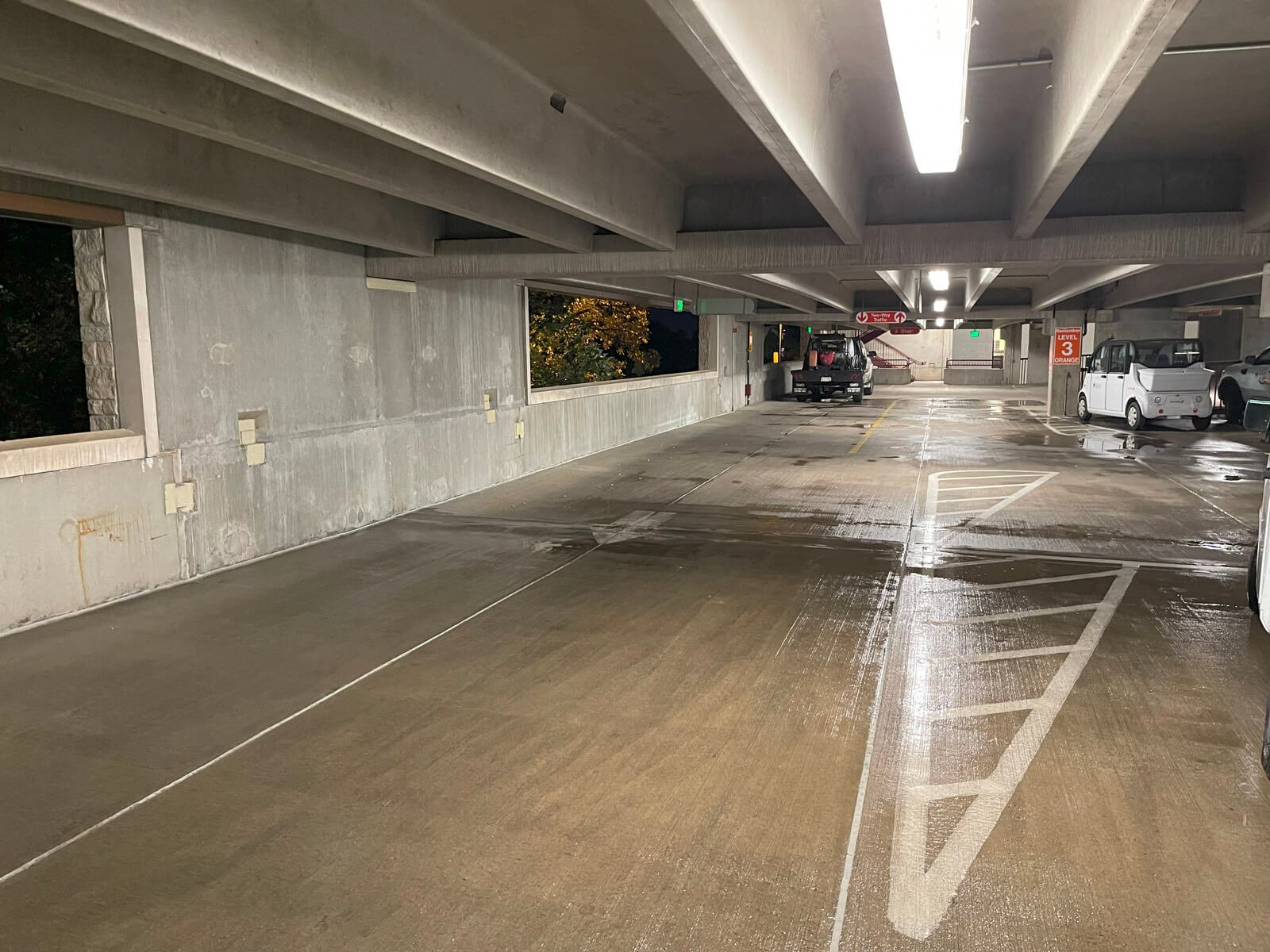
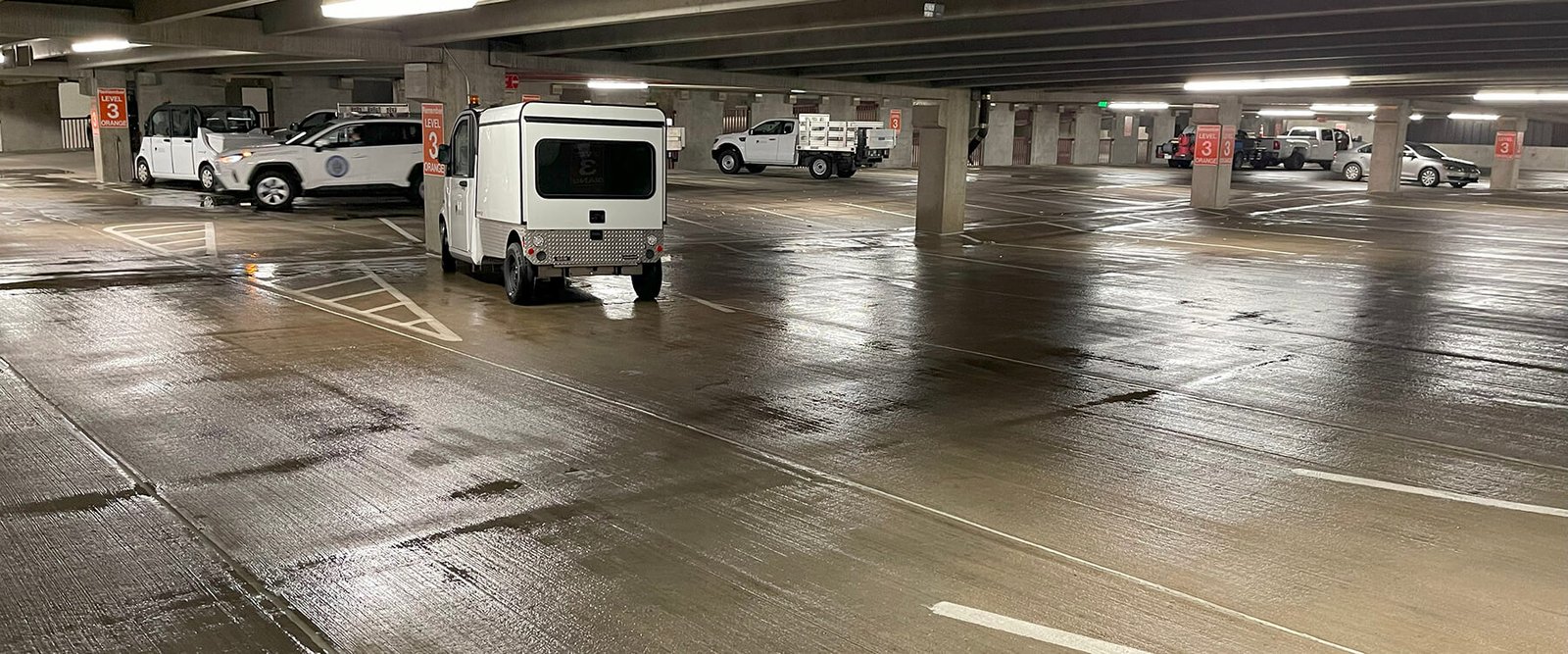
- Visual Inspection: Check all surfaces for missed areas, residual stains, or damage.
- Touch-Up: Address missed spots or stubborn stains with targeted cleaning.
- Remove Protective Coverings: Uncover protected areas and restore garage for use.
- Documentation: Record cleaning activities, chemical usage, and any notable findings for maintenance records.
Safety Considerations When Cleaning and Pressure Washing a Parking Garage
Pressure washing, while effective, involves risks that must be managed to ensure the safety of operators, bystanders, and the facility:
- Slip and Fall Hazards: Wet surfaces can be slippery. Warning signs and barricades should be employed to restrict access until areas are dry.
- Electrical Safety: Water and electricity are a dangerous combination. Ensure all electrical fixtures are protected and avoid directing water at outlets or wiring.
- Chemical Handling: Use detergents and degreasers according to manufacturer instructions. Store chemicals securely and provide operators with appropriate PPE.
- Equipment Safety: Pressure washers generate powerful jets. Operators should be trained to handle the equipment safely, avoiding contact with skin or eyes.
- Ventilation: Garages can trap fumes from cleaning agents or exhaust from equipment. Proper ventilation is essential, especially in enclosed areas.
Environmental Impact and Compliance
Pressure washing generates significant wastewater, often laden with contaminants. Responsible operators take steps to minimize environmental harm:
- Water Conservation: Use efficient nozzles and surface cleaners to reduce water usage.
- Eco-Friendly Detergents: Select biodegradable and non-toxic cleaning agents when possible.
- Wastewater Management: Capture and treat wastewater to prevent pollution of stormwater systems and local water bodies.
- Regulatory Compliance: Follow local ordinances related to water discharge, chemical use, and environmental protection.
Best Practices for Effective and Efficient Parking Garage Cleaning and Pressure Washing
To achieve optimal results, pressure washing professionals follow established best practices:
- Regular Scheduling: Clean parking garages at intervals appropriate to their usage level—monthly, quarterly, or semi-annually.
- Training: Ensure operators are trained in equipment use, chemical application, and safety protocols.
- Maintenance: Keep pressure washing equipment and recovery systems in good repair to avoid breakdowns and ensure consistent performance.
- Communication: Coordinate with facility managers and tenants to minimize disruption and address any concerns.
- Documentation: Maintain detailed records of cleaning schedules, chemical usage, and inspection findings.
Challenges Unique to Parking Garage Cleaning
Parking garages present several challenges that distinguish them from other pressure washing environments:
- Multi-Level Structures: Accessing upper levels and negotiating ramps may require portable equipment or special vehicles.
- Limited Drainage: Many garages have restricted drainage, necessitating careful water management and recovery.
- Continuous Use: Garages that operate 24/7 require phased cleaning to avoid disrupting users.
- Stubborn Stains: Oil and rubber residue may require repeated treatment or specialized chemicals.
- Noise Restrictions: Pressure washing can be noisy; work may need to be scheduled during off-peak hours.
Conclusion
Pressure washing is a vital service for parking garages, offering a powerful means of removing contaminants and preserving the structural integrity and appeal of these essential facilities. By employing the right equipment, techniques, and safety protocols, operators can deliver thorough cleaning while minimizing environmental impact and operational disruption. Regular pressure washing not only maintains the value and safety of a parking garage but also ensures compliance with health and environmental standards. Whether managed in-house or contracted out to specialized service providers, pressure washing should be an integral part of any parking garage maintenance program.
In summary, parking garage pressure washing is a multifaceted operation requiring careful planning, skilled execution, and ongoing attention to safety and environmental stewardship. By adhering to best practices and leveraging modern technology, facility managers and cleaning professionals can keep parking garages clean, safe, and welcoming for years to come.
***We don’t endorse or propose the usage of the following cleaning methods. There is risks involved in improper washing of parking garages and we do not consume or accept any responsibility for others wrongdoings.